Understanding Psychosocial Disability and Recovery-Focused Support
Living with a psychosocial disability can affect many areas of daily life — from maintaining routines and relationships to managing appointments, housing, community participation, and emotional wellbeing. Recovery is often not a straight line, and the right support can make a meaningful difference in helping participants feel more confident, connected, and independent over time.
At Pacific Home Care Solutions, we provide psychosocial recovery-focused supports across Victoria and Tasmania, supporting participants living with mental health challenges to build stability, routine, and meaningful community connection at their own pace.
What Is a Psychosocial Disability?
A psychosocial disability is a disability that may arise from a mental health condition and significantly impacts a person’s ability to participate fully in everyday life.
This may include challenges with:
- motivation and daily routines
- emotional regulation
- social interaction
- maintaining housing
- attending appointments
- communication
- managing responsibilities
- community participation
- independent living
Mental health conditions commonly associated with psychosocial disability may include:
- schizophrenia
- bipolar disorder
- severe anxiety
- depression
- PTSD
- schizoaffective disorder
- complex trauma-related conditions
You can learn more about psychosocial disability through the Psychosocial Disability Access Factsheet 1
What Is Psychosocial Recovery Support?
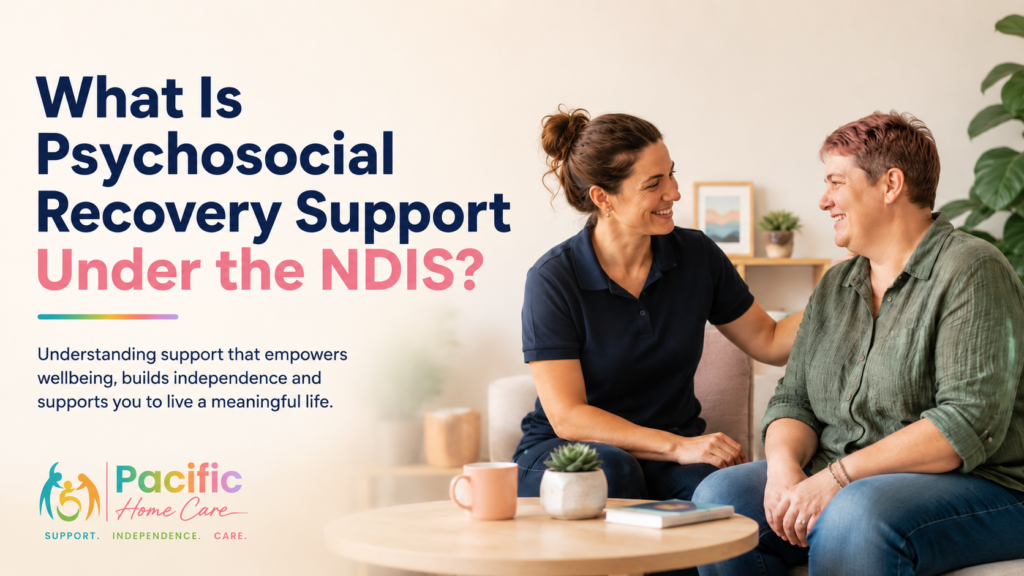
Psychosocial recovery support is designed to help participants build confidence, independence, stability, and community connection while supporting their long-term recovery journey.
Under the NDIS, these supports may help participants:
- develop routines and structure
- reconnect with community life
- reduce social isolation
- improve confidence
- manage daily living tasks
- build independent living skills
- maintain stable housing
- access appointments and services
- strengthen emotional wellbeing
Recovery-focused support is not about forcing people into unrealistic goals or timelines. It is about meeting participants where they are and supporting progress in a way that feels safe, achievable, and sustainable.
How Psychosocial Supports Can Help
The right support can make everyday life feel less overwhelming and more manageable.
Supports may include:
- NDIS Community Access
- support attending appointments
- transport assistance
- emotional support and well-being check-ins
- help with routines and structure
- support with shopping and errands
- tenancy and housing support
- assistance navigating services
- Support Coordination service
- SIL
- travel training and transport confidence
- support reconnecting with hobbies and interests
For many participants, psychosocial support is not simply about “getting out of the house.” It is about rebuilding trust, confidence, safety, routine, and connection over time.
The Importance of Consistency
For participants living with psychosocial disability, consistency and trust are often just as important as the support itself.
Frequent staff changes, poor communication, and rushed support environments can increase distress and instability. A recovery-focused approach means providing supports that feel:
- calm
- predictable
- respectful
- culturally safe
- participant-led
At Pacific Home Care Solutions, we focus on building genuine long-term relationships between participants and support workers because meaningful recovery is often built through trust and consistency over time.
Psychosocial Supports and Independent Living
Psychosocial recovery support can also play an important role in helping participants maintain stable housing and build independent living skills.
Some participants may benefit from:
- In home and support
- SIL
- community access supports
- travel training
- support with routines
- social skill development
- help navigating complex systems
The goal is always to support participants to feel safer, more confident, and more connected within both their home and community environments.
Recovery Looks Different for Everyone
No two recovery journeys look the same.
For one participant, progress may mean attending a community activity independently. For another, it may mean rebuilding routines at home, attending appointments consistently, or feeling comfortable leaving the house again.
Recovery-focused support respects individual goals, personal choice, and each participant’s pace.
At Pacific Home Care Solutions, we believe support should never feel forced or clinical. It should feel human, empowering, and genuinely centred around the individual.
Psychosocial Supports Across Victoria & Tasmania
Pacific Home Care Solutions provides psychosocial and mental health-focused NDIS supports across Melbourne, Hobart, and surrounding communities throughout Victoria and Tasmania.
Our team supports participants living with psychosocial, intellectual, physical, autism, and complex support needs through flexible and person-centred supports designed to promote independence, wellbeing, and meaningful community connection.
Need Support?
Whether you are new to the NDIS, exploring psychosocial supports for yourself or a family member, or looking for a provider who better understands recovery-focused care, our team is here to help.
We take the time to understand the person behind the plan — their goals, routines, challenges, strengths, and what meaningful support looks like for them.
For more information about mental health and psychosocial disability supports under the NDIS, visit the official https://www.ndis.gov.au/participants/working-providers/get-know-your-providers/guide-working-providers
Information in this article is general in nature and should not replace professional medical or clinical advice.