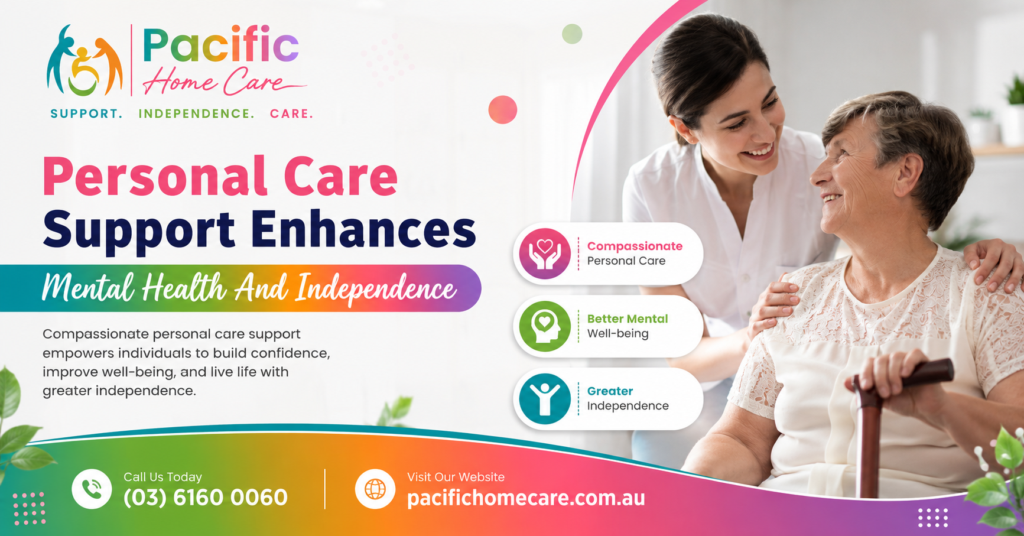
Personal care support fundamentally transforms how individuals manage daily life challenges. What is included in NDIS personal care encompasses assistance with bathing, dressing, and grooming tasks. These services extend far beyond physical care into genuine mental well-being improvement. Discover why many Australians increasingly rely on assistance with daily tasks for enhanced quality of life.
Understanding Personal Care Support Benefits
Benefits of personal care support at home create meaningful impacts on mental health. When individuals receive independent living support, anxiety about managing household responsibilities diminishes significantly. Proper care allows people to focus energy on emotional well-being rather than struggle.
Key Mental Health Improvements Include:
- Reduced stress from overwhelming daily activities
- Increased confidence and sense of control
- Enhanced social engagement opportunities
- Improved emotional stability and mood
- Greater peace of mind for families
- Better sleep quality through reduced worry
Daily Living Support Under NDIS Explained
Daily living support under NDIS explained to providers provides structured assistance for essential activities. This includes disability care assistance with personal hygiene, meal preparation, and household management. The system recognises that physical support directly impacts psychological wellbeing outcomes. Australians benefit from tailored plans matching individual circumstances and requirements.
What Support Covers:
|
Support Type |
Mental Health Benefit |
|
Personal care assistance |
Reduced shame and isolation |
|
Meal planning helps |
Better nutrition and mood |
| Household tasks |
Decreased overwhelm |
| Medication support |
Improved consistency and safety |
How Personal Care Improves Quality of Life
How personal care improves quality of life extends to emotional and psychological dimensions. When self-care support services handle routine tasks, individuals gain mental bandwidth. This freedom enables engagement with meaningful activities, hobbies, and relationships. Greater independence builds self-esteem and reduces dependency anxiety significantly.
Psychological Wellbeing Gains:
- Restoration of personal dignity and autonomy
- Opportunity for meaningful social participation
- Reduced depression symptoms through activity engagement
- Improved cognitive function and mental clarity
- Enhanced feelings of purpose and value
The Connection Between Care and Mental Wellness
Receiving home care services demonstrates self-compassion and a priority on well-being. This act itself strengthens mental health foundations. Individuals who access support report feeling less isolated and more supported. Professional assistance normalises asking for help within Australian communities.
Support Enables:
- Participation in mental health treatment
- Attendance at social and community activities
- Better management of chronic mental health conditions
- Improved medication adherence through structured routines
- Prevention of crises through consistent care
Your Path Forward
Taking action today improves tomorrow’s well-being significantly. Don’t postpone accessing support that genuinely transforms lives. Explore available options and connect with services suited to individual needs.
Start Your Support Journey Today — Discover how wellbeing improvement begins with one conversation. Speak directly to Pacific Home Care Solutions to get our daily living support under NDIS explained. Dial 0469810127 for more details.
Frequently Asked Questions
Q1: How quickly can I access personal care support?
A: Timeframes vary depending on circumstances and available services. Contact providers directly for specific timelines.
Q2: Will support affect my existing mental health treatment?
A: Support complements existing treatment, often improving overall outcomes. Consult your healthcare provider about integration.
Q3: Can family members remain involved in my care?
A: Absolutely. Many arrangements include family collaboration and communication.
Q4: What if my needs change over time?
A: Plans adjust regularly to reflect changing requirements and circumstances.
Q5: Is support only for elderly people?
A: No. Support serves people of all ages with varying needs.